Three products, from story to classroom.
AxeBug turns the school English lesson into a space adventure. Makarna Macerası teaches young children concepts through audio stories. Beceri Pusulası shows the skills behind a score in Turkish lessons.
AxeBugLive
From comic page to classroom
AxeBug is our largest project. It began as a comic and is now a full learning series, with books, activities and a platform for schools.
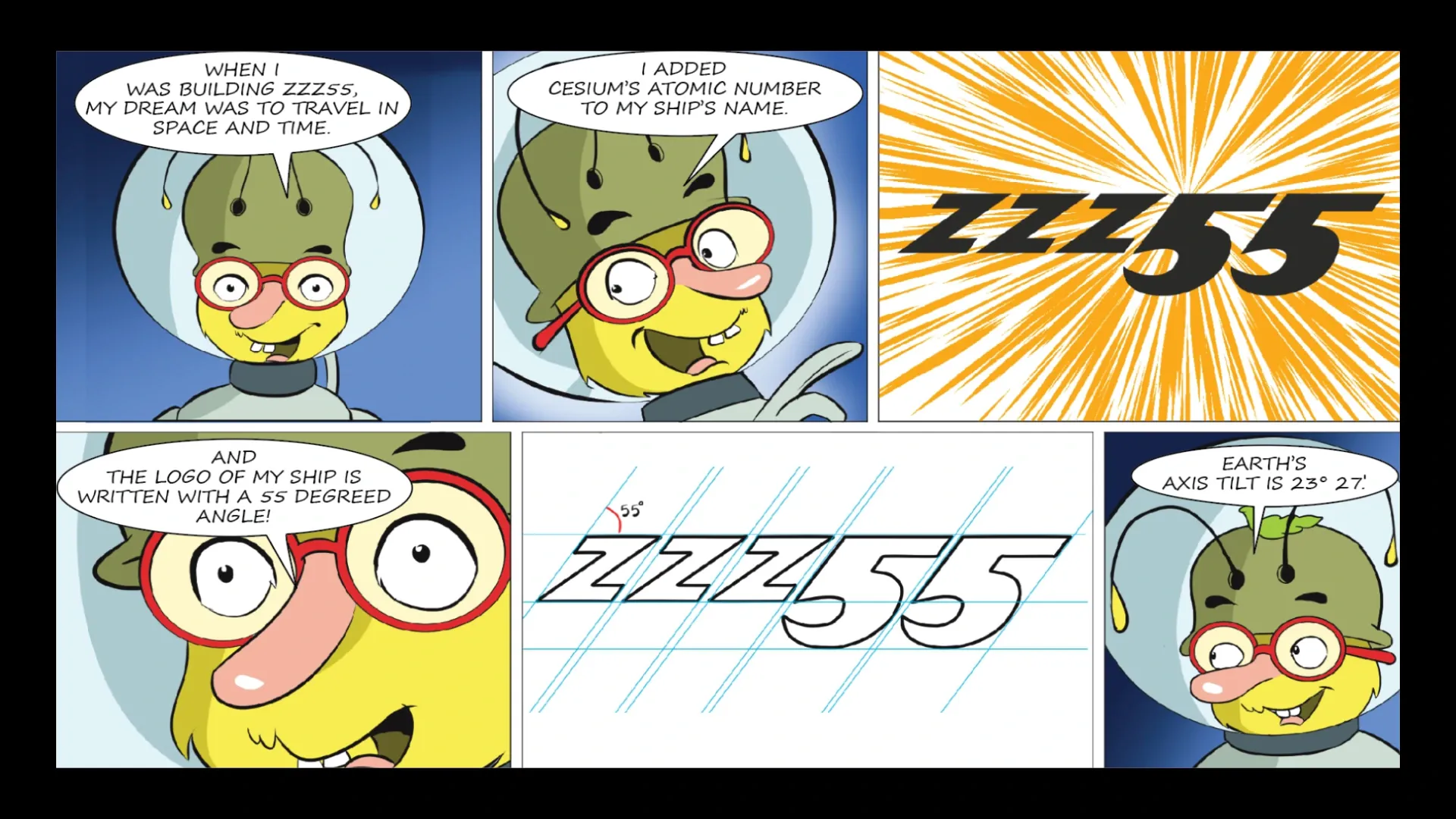
The comics
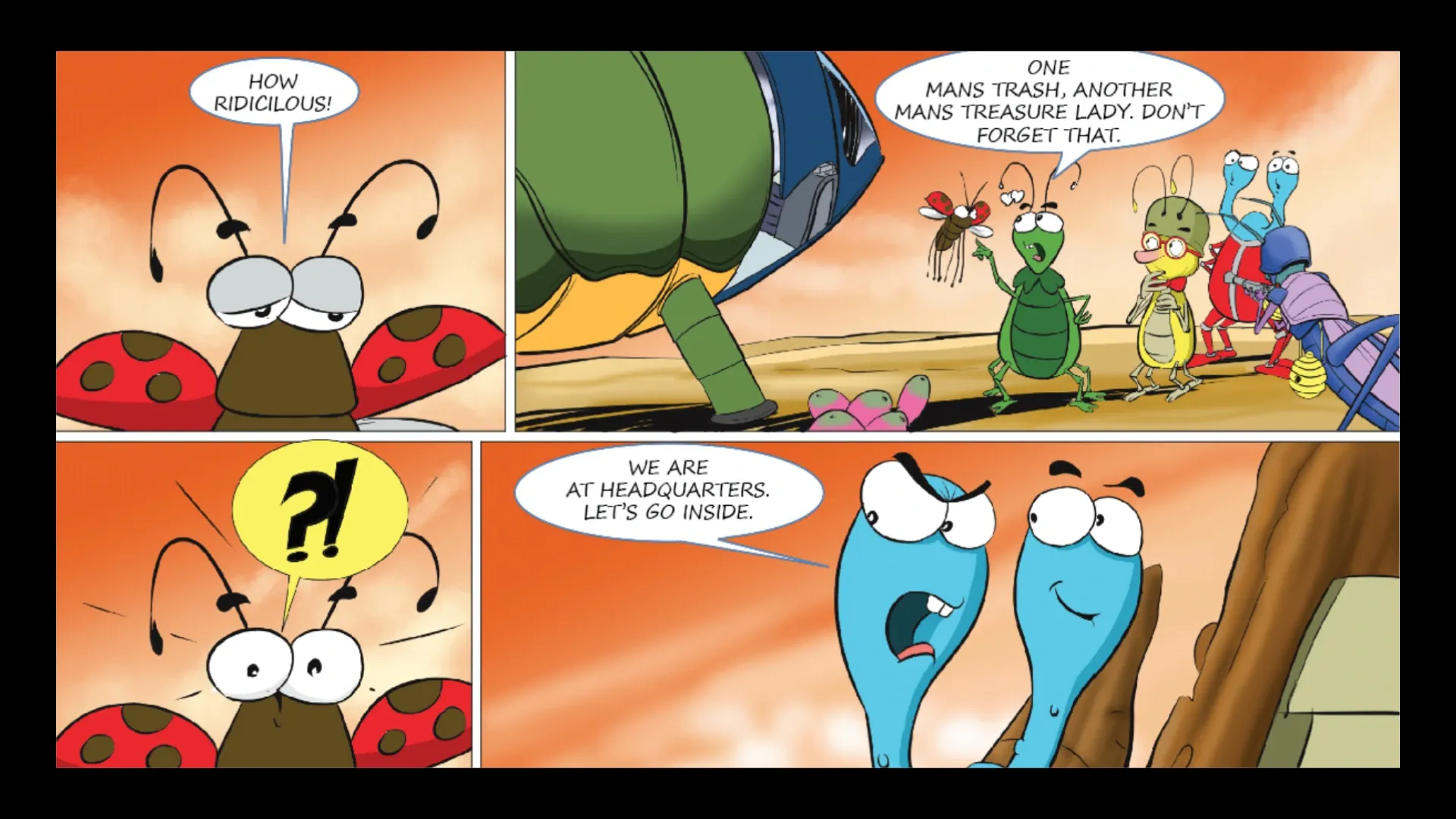
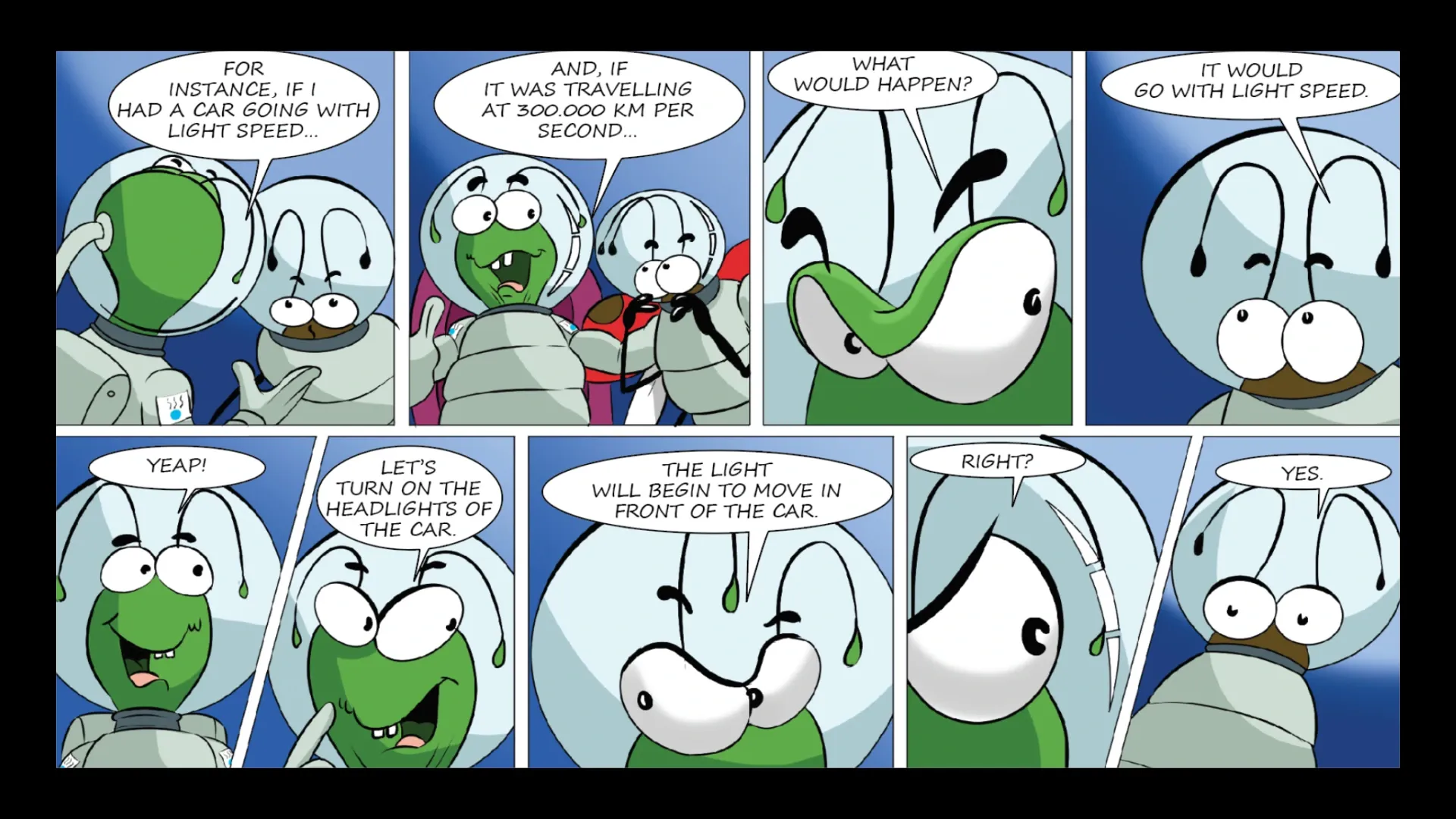
The Space Adventure series runs to 12 issues. Axebug and friends head into deep space aboard the ZZZ55; each issue is its own adventure, and together they make one long story.
The dialogue is built on real-life English, so the language is something the characters speak rather than a list to memorise. The stories and activities work on the four Cs of 21st-century skills: communication, collaboration, creativity and critical thinking.
Books and packs
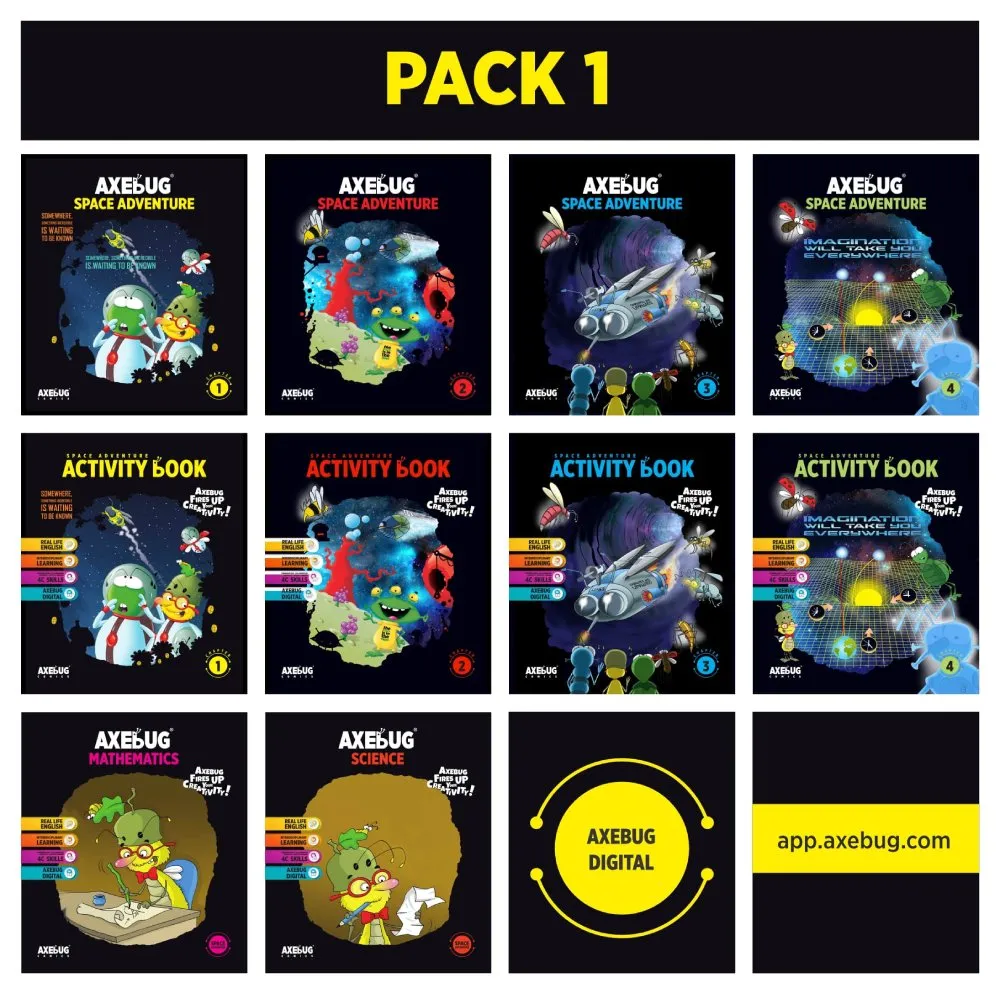
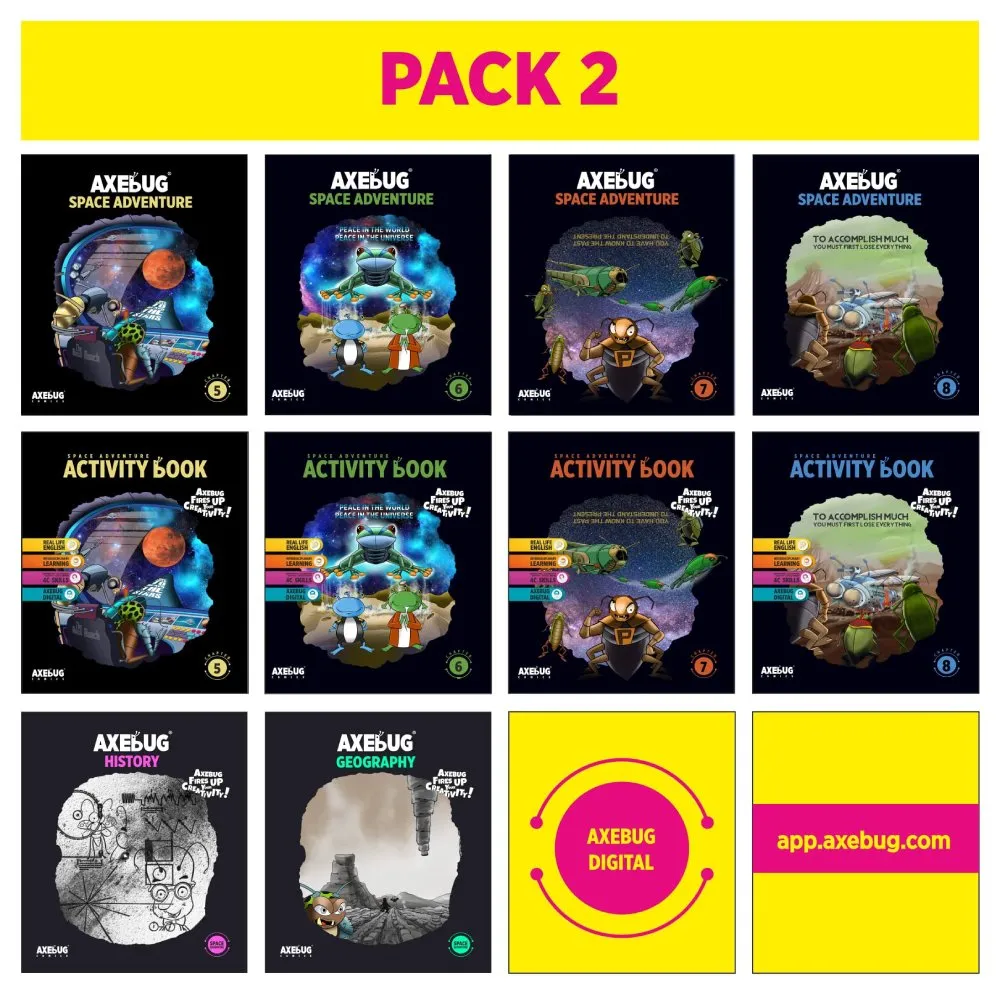
The series is split into four packs by grade. Grade 4 starts with Pack 1 and grade 7 reaches Pack 4, and the packs are written for levels A1 to B1.
The packs bring together four comics, an activity book for every issue, and interdisciplinary books that grow out of the story: science and mathematics, geography and history, art and design.
The platform
app.axebug.com is the digital side of the series. Students read and listen to each of its 384 panels, review with word cards and spelling practice, and check their progress with quizzes and exams.
Teachers manage classes, homework, the yearly plan and reports in one place, and schools set up their own teacher and student accounts.
Read and listen
The digital book of Chapter 1 is open to everyone on axebug.com. Turn the pages and listen to every scene.

Makarna MacerasıIn closed preview
Audio stories from the Land of Pasta
Audio stories for the early years.
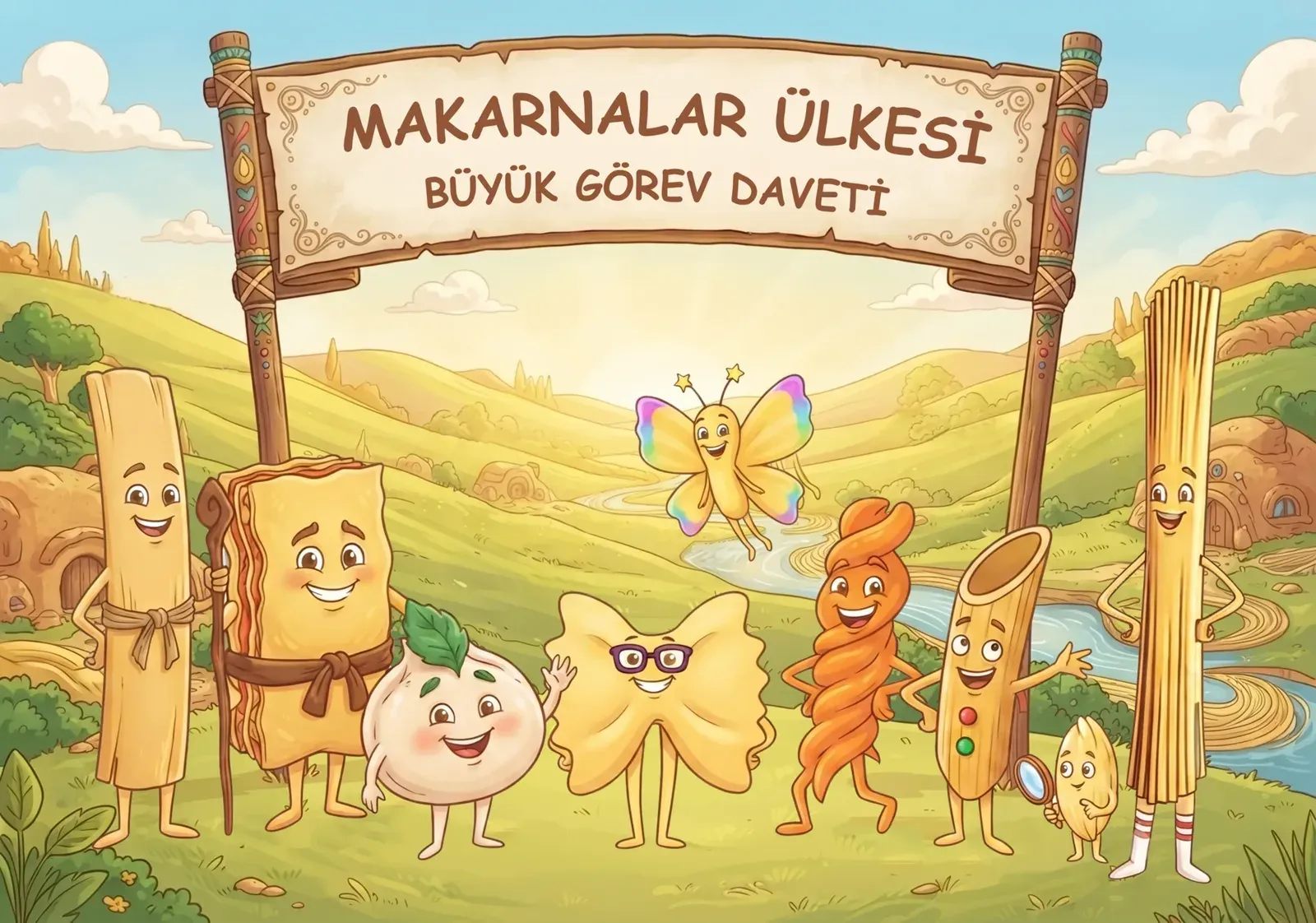
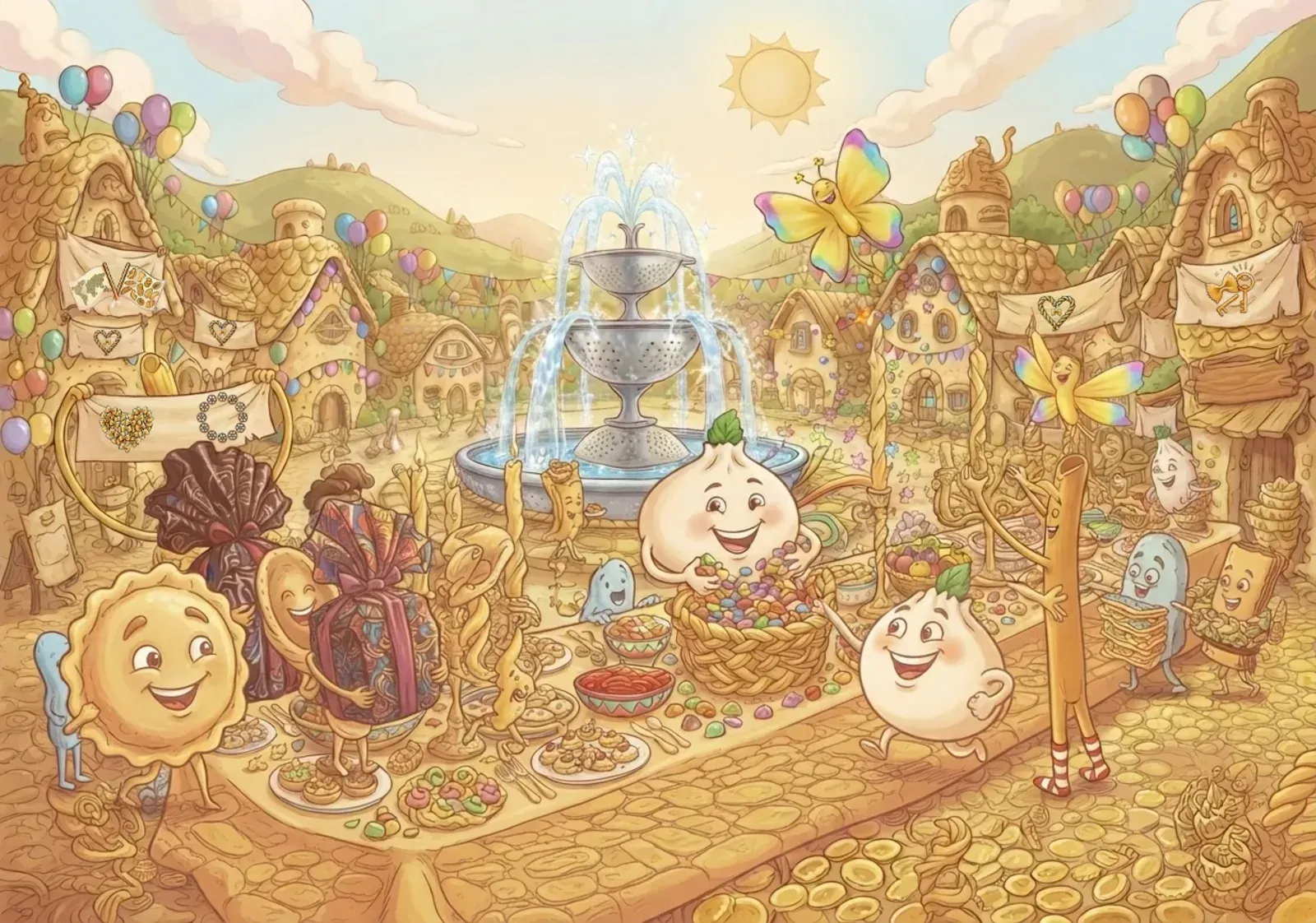
Makarna Macerası (“Pasta Adventure”) is a series of illustrated audio stories for children aged 5 to 8. Its eleven stories, set in the Land of Pasta, open with an adventure about working together and close with a festival of sharing. In between, each story follows one character through an opposite children already use every day: long and short, inside and outside, before and after.
The rules for the child are simple. A scene is complete when its audio ends, and the next story opens when the one before it is finished. There are no percentages or scores on screen: progress shows in the colour of each card, which comes alive from the bottom up as the child listens.
In pre-schools, the same stories become a teaching model. Teachers bring each story into class with a lesson plan, record what they observe, and assess skills against criteria rather than points. Parents manage child profiles and story packs from their own area.
Makarna Macerası is currently in closed preview, in Turkish. The first three stories are free.
Beceri PusulasıIn development
Measuring the skill behind the score
Skills-based assessment for Turkish lessons.
When a student scores 72 in a Turkish test, the 72 on its own says very little. Beceri Pusulası (“Skills Compass”) breaks the same result down into skills such as reading, writing, listening, speaking, inference and interpretation, and shows what the student can do and where they need support.
Every question in the bank is tied to a learning outcome and to skills in Türkiye’s Maarif Model Turkish curriculum. Teachers build each test against an assessment plan. Test answers and pieces written in class are marked with the same rubric, each one adds evidence, and the student’s skills profile sharpens over time.
Tests can be taken on screen or on paper. Printed answer sheets are scanned and matched to each student by QR code. AI support speeds up reading and marking the answers; teachers confirm the results.
The first subject is Turkish. Beceri Pusulası is in development.
Some of the skills a profile shows
- Reading
- Writing
- Listening
- Speaking
- Inference
- Interpretation
- Comparison
- Summarising
Have a project in mind?
If you are a school, a publisher or an organisation and want to make something together, write to us. Your message goes straight to our team.